Buy lead-generation.eu ?
We are moving the project
lead-generation.eu .
Are you interested in purchasing the domain
lead-generation.eu ?
domain@kv-gmbh.de · 0541-91531010
Buy lead-generation.eu ?
What is a possessive determiner?
A possessive determiner is a word that is used before a noun to show ownership or possession. Examples of possessive determiners include words like "my," "your," "his," "her," "its," "our," and "their." These determiners indicate who the noun belongs to or is associated with. **
What is a possessive determiner in French?
A possessive determiner in French is a word that indicates ownership or possession. It agrees in gender and number with the noun it is describing. Examples of possessive determiners in French include "mon" (my), "ton" (your), "son" (his/her/its), "notre" (our), and "leur" (their). These determiners are placed before the noun they modify. **


Similar search terms for Determiner
Top-Angebote
Products related to Determiner:
-
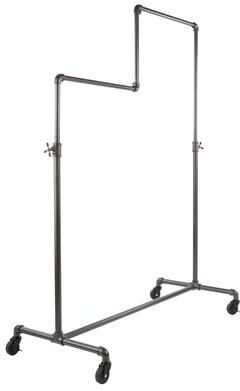
Econoco Pipeline Adjustable 2 Way Cross Bar Rack"Adjusts from 44"" - 72"" in height. Base: 21""W x 21""D with 13"" Faceouts. Constructed of heavy duty 1 1/4"" diameter plumbing pipe in anthracite grey finish. Includes four 2"" casters, 2 locking, 2 non-locking. The Pipeline collection is a uniquely..."236,99 $*Shipping: 0,00 $Secure redirect to the provider


-
What is a possessive determiner in English?
A possessive determiner in English is a word that is used before a noun to show ownership or possession. Examples of possessive determiners include "my," "your," "his," "her," "its," "our," and "their." These determiners indicate who the noun belongs to or is associated with. Possessive determiners are an essential part of grammar as they help clarify relationships between people or things. **
-
Does French have the demonstrative determiner "cettes"?
No, French does not have the demonstrative determiner "cettes." The correct forms of the demonstrative determiner in French are "cette" for singular feminine nouns, "ce" for singular masculine nouns, and "ces" for plural nouns regardless of gender. "Cettes" is not a standard form in the French language. **
-
Do you capitalize adjectives when they are preceded by a determiner?
In English, adjectives are not capitalized when they are preceded by a determiner. Determiners are words like "the," "a," "an," "this," "my," etc. Adjectives are only capitalized when they are at the beginning of a sentence or part of a proper noun. **
-
Do you write adjectives in capital or lowercase letters when there is a determiner before them?
Adjectives are typically written in lowercase letters when there is a determiner before them. Determiners such as articles (a, an, the), possessive pronouns (my, your, his), and demonstratives (this, that) are usually written in lowercase, while the adjective that follows them is also written in lowercase. This maintains consistency in sentence structure and follows standard grammar rules. **


In French, do you use an apostrophe with the interrogative pronoun "quelle" and the possessive determiner "ma"?
Yes, in French, you use an apostrophe with the interrogative pronoun "quelle" and the possessive determiner "ma" when they are followed by a word starting with a vowel or a silent "h". For example, "quelle est ton adresse?" (What is your address?) and "ma amie" (my friend). **
Why in French is 'l'orange' the fruit with the demonstrative determiner 'cette' feminine and not 'cet', because 'orange' starts with a vowel?
In French, the word 'orange' is considered feminine, regardless of whether it starts with a vowel or a consonant. The choice of the demonstrative determiner 'cette' instead of 'cet' is based on the gender of the noun 'orange', not the initial sound. In this case, 'orange' is feminine, so it is paired with the feminine determiner 'cette'. **
Top-Angebote
Products related to Determiner:
-
Infinity: Shadow Affairs Campaign - Modiphius Entertainment Printed Campaign BookJoin the war for Paradiso in the Infinity roleplaying game with the Shadow Affairs Campaign. This printed campaign book is designed for both new and experienced players, offering a substantial and balanced experience. Players join an unconventional force drawn from across the Human Sphere, navigating military pressure, factional intrigue, and the constant risk of enemy intervention. The campaign includes detailed maps, structured scenarios, and numerous optional side missions, as well as NPCs, equipment, and adversaries for the game master to use. Team Mercury characters are also included, who may assist, replace, undermine, or confront the player characters. The book also provides rules for converting player characters into playable N3 units, making it a valuable resource for game masters and players alike. Published by Modiphius Entertainment.16,54 £*Shipping: 3,95 £Secure redirect to the provider
-
Econoco Vintage Pipeline Adjustable Rolling Garment Rack"42"" wide Hangrail - Adjusts from 44"" - 72"" in height. Base: 42-1/2""W x 23-3/8""D. Constructed of heavy duty 1 1/4"" diameter plumbing pipe in anthracite grey finish. Includes four 3"" casters, 2 locking, 2 non-locking."277,99 $*Shipping: 0,00 $Secure redirect to the provider
-
Econoco Pipeline Adjustable 2 Way Cross Bar Rack"Adjusts from 44"" - 72"" in height. Base: 21""W x 21""D with 13"" Faceouts. Constructed of heavy duty 1 1/4"" diameter plumbing pipe in anthracite grey finish. Includes four 2"" casters, 2 locking, 2 non-locking. The Pipeline collection is a uniquely..."236,99 $*Shipping: 0,00 $Secure redirect to the provider
-
What is a possessive determiner?
A possessive determiner is a word that is used before a noun to show ownership or possession. Examples of possessive determiners include words like "my," "your," "his," "her," "its," "our," and "their." These determiners indicate who the noun belongs to or is associated with. **
-
What is a possessive determiner in French?
A possessive determiner in French is a word that indicates ownership or possession. It agrees in gender and number with the noun it is describing. Examples of possessive determiners in French include "mon" (my), "ton" (your), "son" (his/her/its), "notre" (our), and "leur" (their). These determiners are placed before the noun they modify. **
-
What is a possessive determiner in English?
A possessive determiner in English is a word that is used before a noun to show ownership or possession. Examples of possessive determiners include "my," "your," "his," "her," "its," "our," and "their." These determiners indicate who the noun belongs to or is associated with. Possessive determiners are an essential part of grammar as they help clarify relationships between people or things. **
-
Does French have the demonstrative determiner "cettes"?
No, French does not have the demonstrative determiner "cettes." The correct forms of the demonstrative determiner in French are "cette" for singular feminine nouns, "ce" for singular masculine nouns, and "ces" for plural nouns regardless of gender. "Cettes" is not a standard form in the French language. **
Similar search terms for Determiner
-
Drop Dash Deals Hydraulic Flange Spreader With Manual Pump For Pipeline Repair Hydraulic Flange Spreader With Manual Pump For Pipeline RepairMake tough separation jobs feel controlled, safer, and more efficient. This 1 pc of hydraulic flange spreader is built for maintenance teams, mechanics, and industrial workers who need reliable force in tight service areas. With an 8T hydraulic...234,97 $*Shipping: 0,00 $Secure redirect to the provider
-
Nobilis Tilia Obličejový olej Růžový nurturing oil with rose oil 20 mlNobilis Tilia Obličejový olej Růžový, 20 ml, Face oils for Women, Does it feel as though your skin needs something more than just the care provided by a cream? The Nobilis Tilia Obličejový olej Růžový facial oil is the perfect product to enrich your skincare routine – it gives the skin an extra dose of nourishment and also softens it. Characteristics: regenerates and moisturises restores skin elasticity nourishes deeply regenerates the skin barrier Ingredients: vegan product rose oil – locks in water to keep skin hydrated, nourishes, promotes a youthful appearance and skin elasticity, helps smooth wrinkles, softens, harmonizes and promotes regeneration jojoba oil – keeps skin intensely hydrated, provides antioxidant protection, counteracts irritation and dryness, helps regulate sebum production and promotes regeneration almond oil – nourishes, helps lock water in skin and keep it hydrated, softens rough textures and uneven skin, helps prevent flaking and irritation vitamin E – nourishes, provides antioxidant protection against premature ageing and damage caused by free radicals, helps smooth wrinkles and restore skin firmness and elasticity squalane - locks water in skin by forming a protective layer on its surface, hydrates, softens and smooths, helps regulate sebum production, thanks to its strong antioxidant effects it also contributes to a balanced skin tone How to use: Massage a small amount of oil into clean skin on your face and leave to become absorbed. Use every morning and/or evening.11,65 £*Shipping: 3,99 £Secure redirect to the provider
-
Do you capitalize adjectives when they are preceded by a determiner?
In English, adjectives are not capitalized when they are preceded by a determiner. Determiners are words like "the," "a," "an," "this," "my," etc. Adjectives are only capitalized when they are at the beginning of a sentence or part of a proper noun. **
-
Do you write adjectives in capital or lowercase letters when there is a determiner before them?
Adjectives are typically written in lowercase letters when there is a determiner before them. Determiners such as articles (a, an, the), possessive pronouns (my, your, his), and demonstratives (this, that) are usually written in lowercase, while the adjective that follows them is also written in lowercase. This maintains consistency in sentence structure and follows standard grammar rules. **
-
In French, do you use an apostrophe with the interrogative pronoun "quelle" and the possessive determiner "ma"?
Yes, in French, you use an apostrophe with the interrogative pronoun "quelle" and the possessive determiner "ma" when they are followed by a word starting with a vowel or a silent "h". For example, "quelle est ton adresse?" (What is your address?) and "ma amie" (my friend). **
-
Why in French is 'l'orange' the fruit with the demonstrative determiner 'cette' feminine and not 'cet', because 'orange' starts with a vowel?
In French, the word 'orange' is considered feminine, regardless of whether it starts with a vowel or a consonant. The choice of the demonstrative determiner 'cette' instead of 'cet' is based on the gender of the noun 'orange', not the initial sound. In this case, 'orange' is feminine, so it is paired with the feminine determiner 'cette'. **
* All prices are inclusive of VAT and, if applicable, plus shipping costs. The offer information is based on the details provided by the respective shop and is updated through automated processes. Real-time updates do not occur, so deviations can occur in individual cases. ** Note: Parts of this content were created by AI.